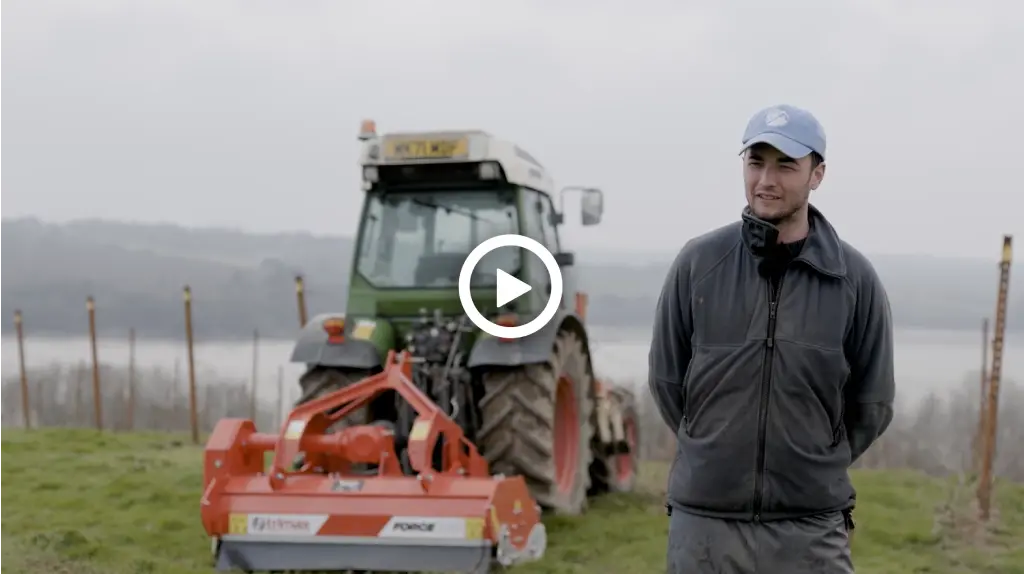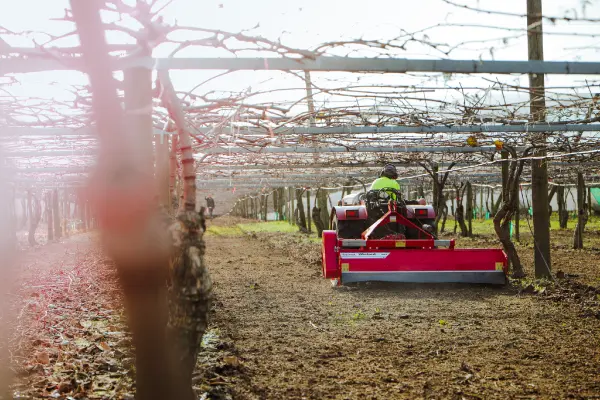
Mowers for orchards and vineyards RIGHT MOWER. EVERY ROW.
From grass management to post-harvest mulching, there’s a Trimax mower for every job on the orchard or vineyard.
Why Orchardists And Growers Choose Trimax Mowers.

Finish Quality.
Whether mowing grass between rows or mulching prunings, Trimax delivers a clean, even finish. Look behind the tractor and the result speaks for itself, row after row, season after season.
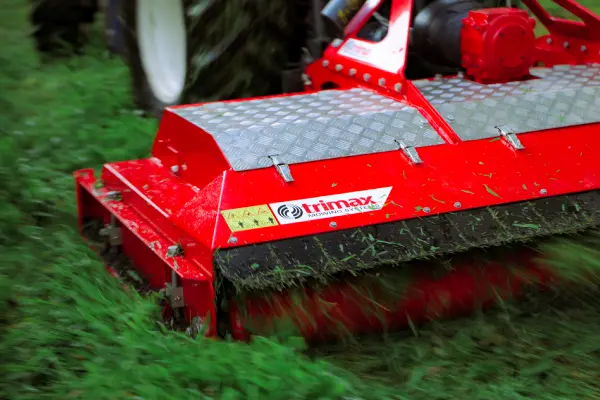
Handles Any Material.
From short cover crops to heavy, persistent grass growth and orchard prunings, Trimax machines handle varied and demanding material without damage or downtime.
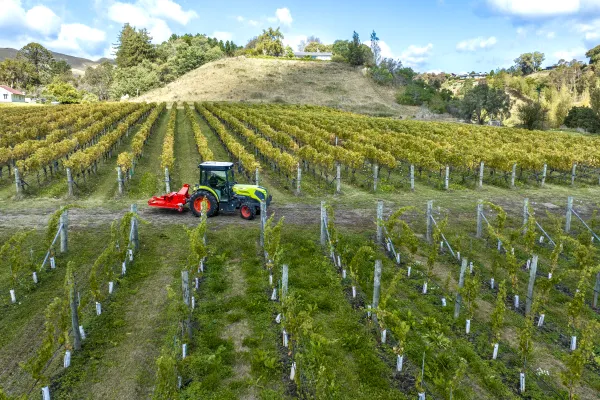
Gets The Job Done In One Pass.
Trimax mowers are built to get through your rows in a single pass, from long grass to a season’s worth of prunings. Less time on the tractor, more ground covered.
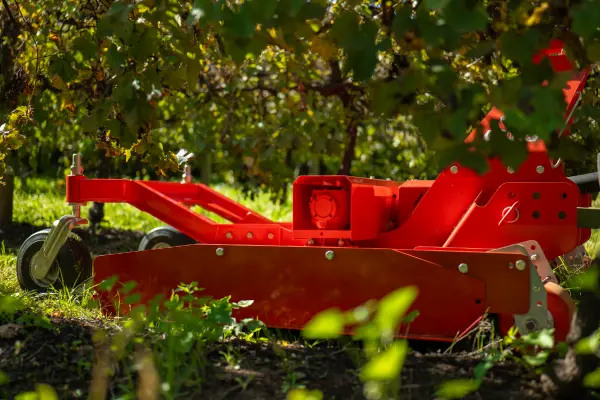
Built to Last.
Trimax machines are engineered for the demands of commercial use. Robust construction, quality components, and minimal wear points keep operators in the orchard, not the shed.
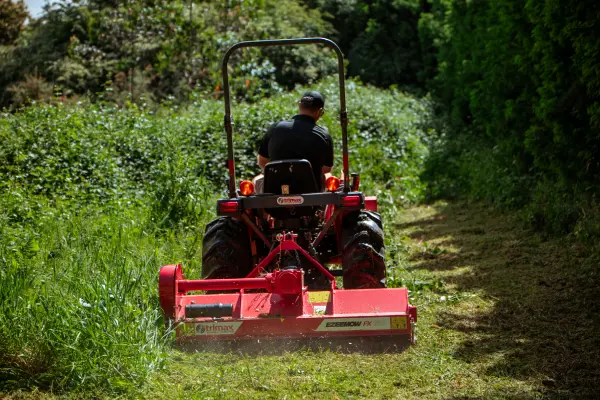
Minimal Maintenance.
Less time servicing, more time in the rows. Trimax mowers are designed to keep daily maintenance to a minimum, so your crew spends more of the working day mowing and mulching.
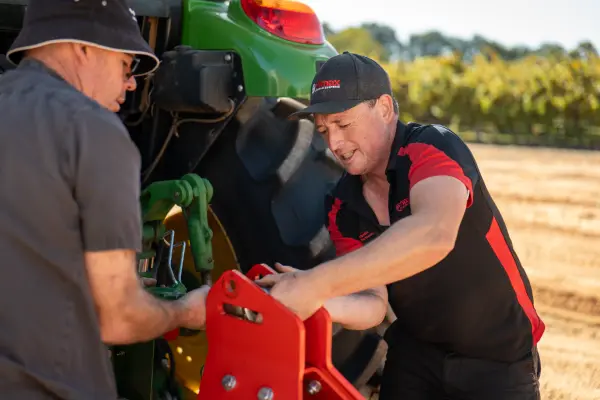
Support That Keeps You Moving.
Parts availability and responsive support have kept operators working for decades. Downtime in an orchard or vineyard has a real cost, and Trimax understands.
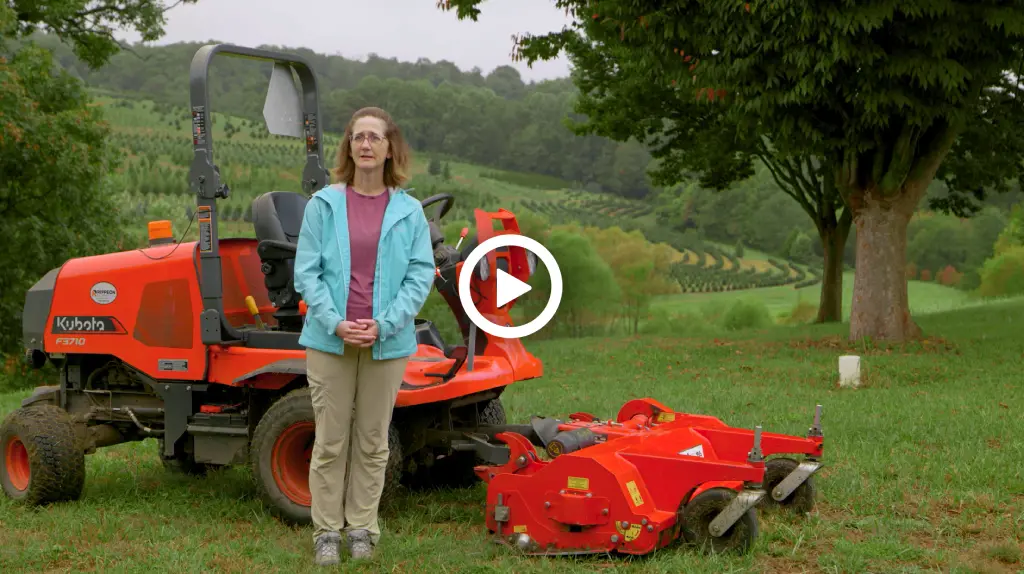
Trusted by growers across the United States and beyond.
“The good thing about this Flail Mower is that it typically just grinds up branches without any trouble. It glides over steep hills and undulations beautifully.”
Anne Hubbard
Head of Mowing Operations, Piney Run Nursery and Farm
“I think if you’re working around orchards, any sort of tight spaces, I’d say absolutely go for it. I mean, it’s just a really, really reliable piece of kit.”
Alexander Ramsden
Operator, Shillingham Vineyard
Recommended Trimax Mowers for Orchards and Vineyards.
Trimax flail mowers are used on orchards and vineyards around the world. From mulching prunings to mowing between the rows, find the right machine for your operation below.
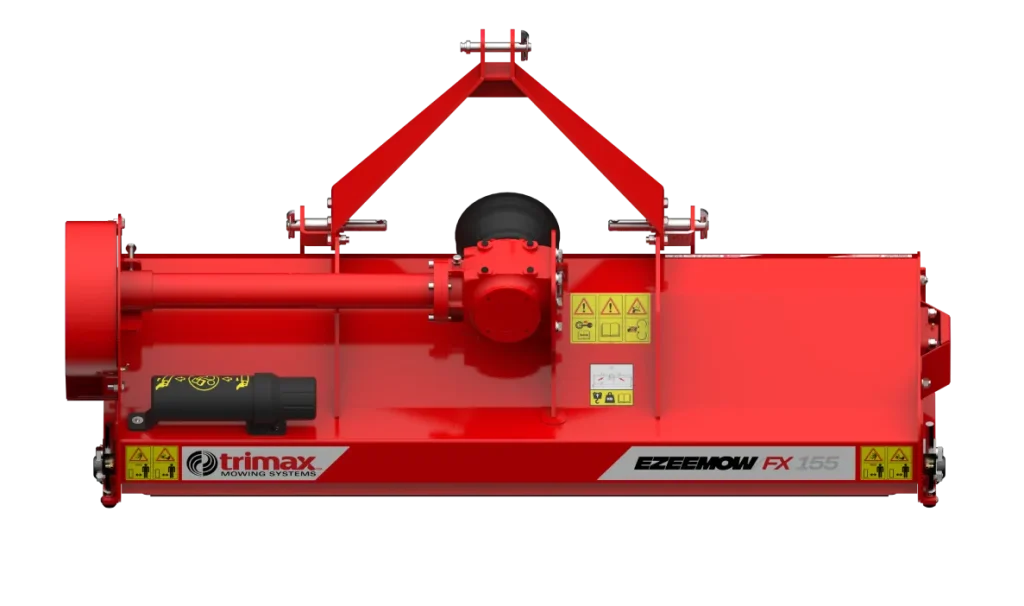
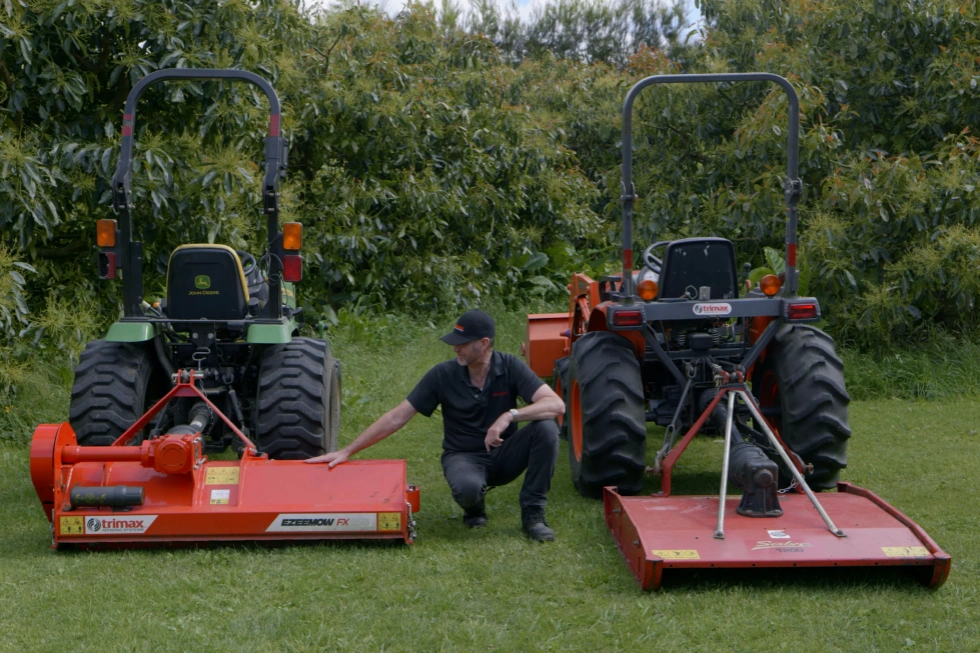
Ezeemow FX
Compact Flail Mower for Tight Spaces.
Despite its compact size and low HP requirements, the Trimax Ezeemow can handle anything – from striping fine turf on sports fields, to mulching waist-high vegetation 1 inch in diameter.
- Widths: 4′ 5 1/2″, 5′, 6′
- Mulching capacity: Up to 1″ diameter
- Minimum PTO Output: From 17hp
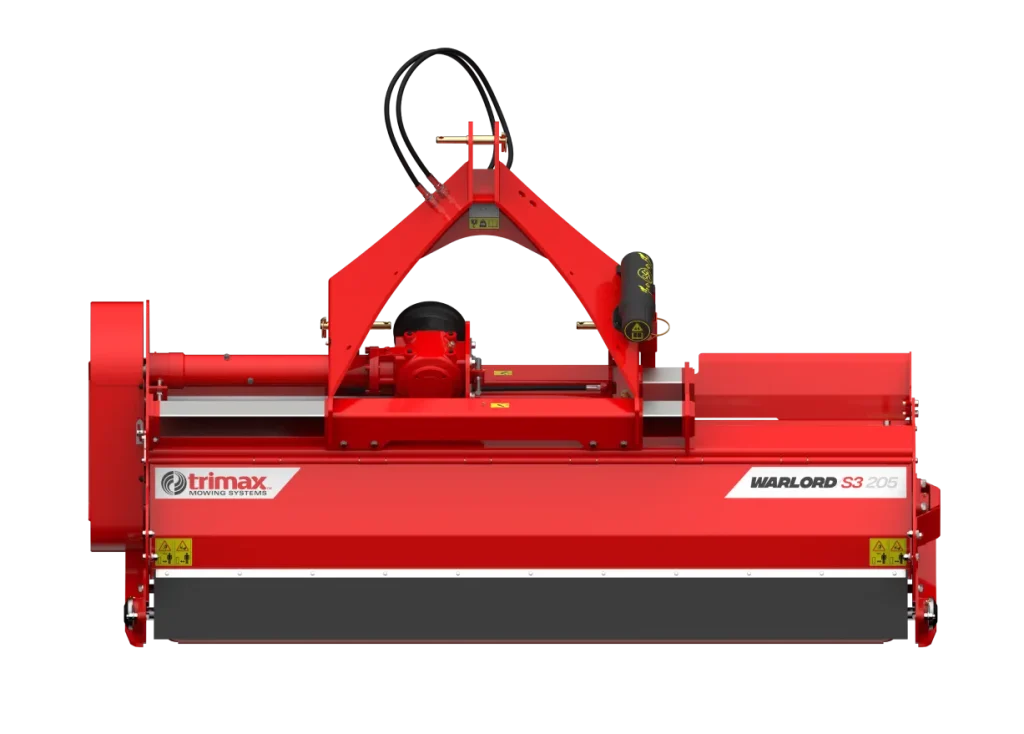
Warlord S3
All-Purpose Flail Mulcher.
Incredibly robust, the Trimax Warlord can shred branches up to 3 inches in diameter, making it a powerful working companion in any application. Fitted with hydraulic side-shift for maneuverability around objects.
- Widths: 5′ 8 1/2″, 6′ 8″, 7′ 8″
- Mulching capacity: Up to 3″ diameter
- Minimum PTO Output: From 40hp
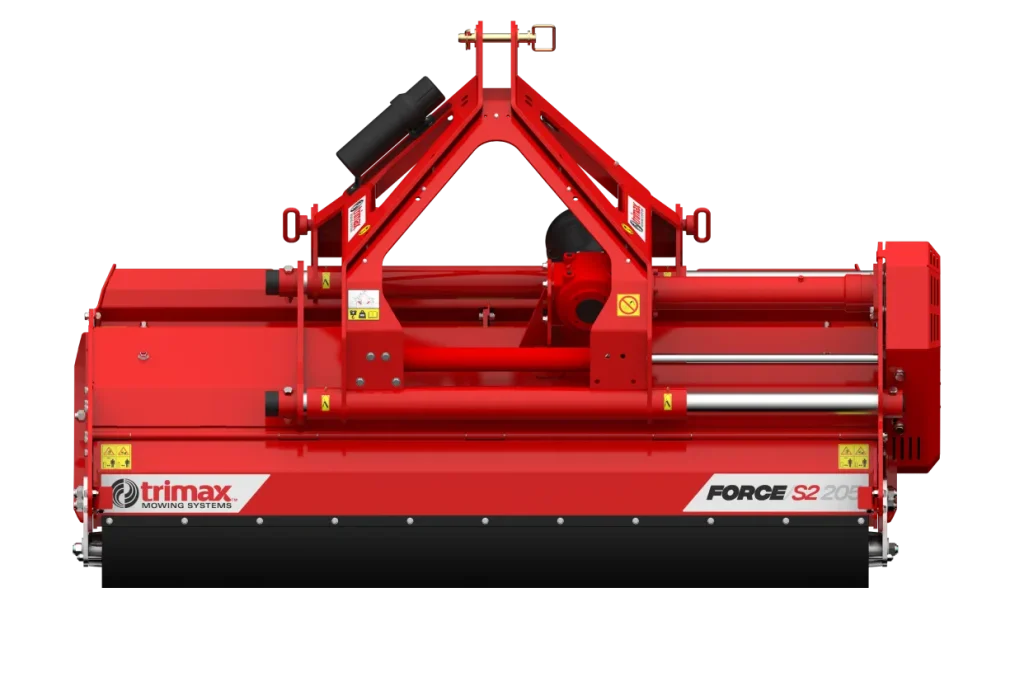
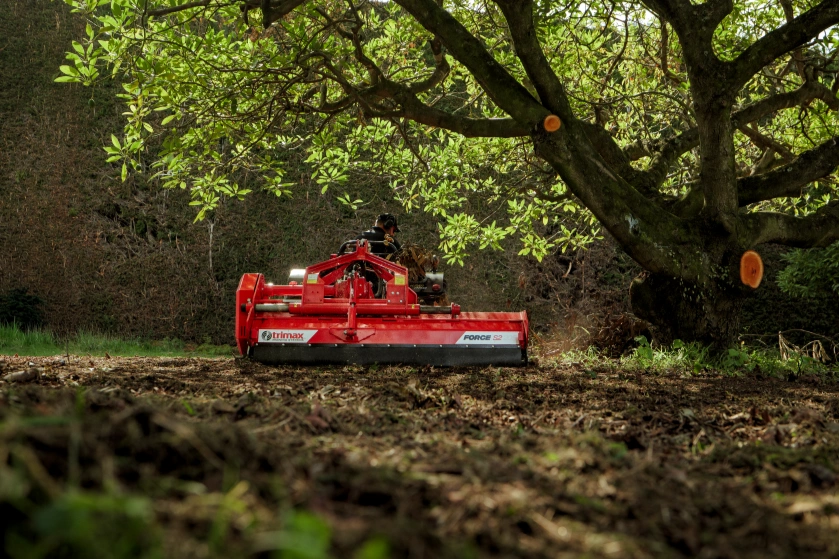
Force S2
Heavy-Duty Flail Mulcher. Maximum Versatility.
Tough enough for roadsides, efficient enough for open space management, and versatile enough to handle everything in between, the Trimax Force is the multitool mower you need to produce a pristine cut and superior finish in almost any application.
- Widths: 4′ 8 3/4″, 5′ 8 1/8″, 6′ 7 3/8″, 7′ 6 3/8″
- Mulching capacity: Up to 3.5″ diameter
- Minimum PTO Output: From 35hp
Not Sure Which Mower Suits Your Orchard or Vineyard?
Every operation is different. Tell us about your rows, your crop, and your conditions and a Trimax specialist will recommend the right system.
Frequently Asked Questions.
What is hydraulic side-shift and do I need it?
Hydraulic side-shift allows you to offset the mower from the tractor centerline without repositioning the tractor, useful for working close to tree trunks, irrigation lines, and row stakes. If your orchard has irregular obstacles or tight row boundaries, it saves significant time across a season. Both the Warlord S3 and Force S2 offer hydraulic side-shift up to 19".
Can one machine handle both grass management and pruning mulch?
A heavy-duty flail mulcher handles both jobs and is the right choice for operations where simplicity and a single implement matter. For larger or more intensive operations, pairing a dedicated inter-row rotary mower for grass with a flail mulcher for prunings delivers better productivity. Each machine is optimized for its application, covering more ground per hour at lower running cost. Talk to a Trimax specialist about your property size and workload and we can recommend the right setup.
What is the difference between the Warlord S3 and the Force S2?
Both are flail mulchers suited to orchard and vineyard work. The Warlord S3 handles branches and prunings up to 3" in diameter and suits most commercial orchards. The Force S2 steps up to 3.5", with a heavier-duty flail system and a reinforced headstock for the toughest material. It also needs less routine servicing, with sealed bearings that mean no daily greasing and a replaceable internal liner that protects the body. The 4′ 8 3/4″ width suits tighter vineyard rows too. If your prunings are regularly thicker than 3", your rows are narrow, or you want less time on servicing, the Force S2 is the better choice.
How much tractor horsepower do I need?
It depends on the machine and the application. Compact flail mowers for light work start from 17hp at the PTO. Heavy-duty machines handling thick prunings need 40hp and above. Always check PTO horsepower, not engine horsepower, and build in a 10 to 15 percent buffer above the stated minimum for consistent performance in heavy material.
What maintenance does an orchard mower require?
It depends on the machine. The Force S2 uses sealed bearings, so there is no daily greasing. The Ezeemow FX and Warlord S3 need routine greasing, so check the service schedule for the intervals. Flails wear with use, and how often you replace them depends on your soil and what you’re mulching, with rocky ground wearing them fastest. On the Force S2, a replaceable internal liner protects the mower body and can be changed in around 30 minutes without removing the rotor.
Related Articles.
October 13, 2026
Introducing the Trimax Force S2, the next evolution of Force, delivering tougher mulching performance, greater versatility, and lower maintenance.
February 2, 2026
Flail and slasher mowers differ in blade design and discharge, influencing power demand, safety, mulching ability, and overall mowing performance.
January 21, 2026
Rotary and flail mowers use different cutting systems to manage vegetation, making each better suited to specific terrain, safety, and residue control requirements.